
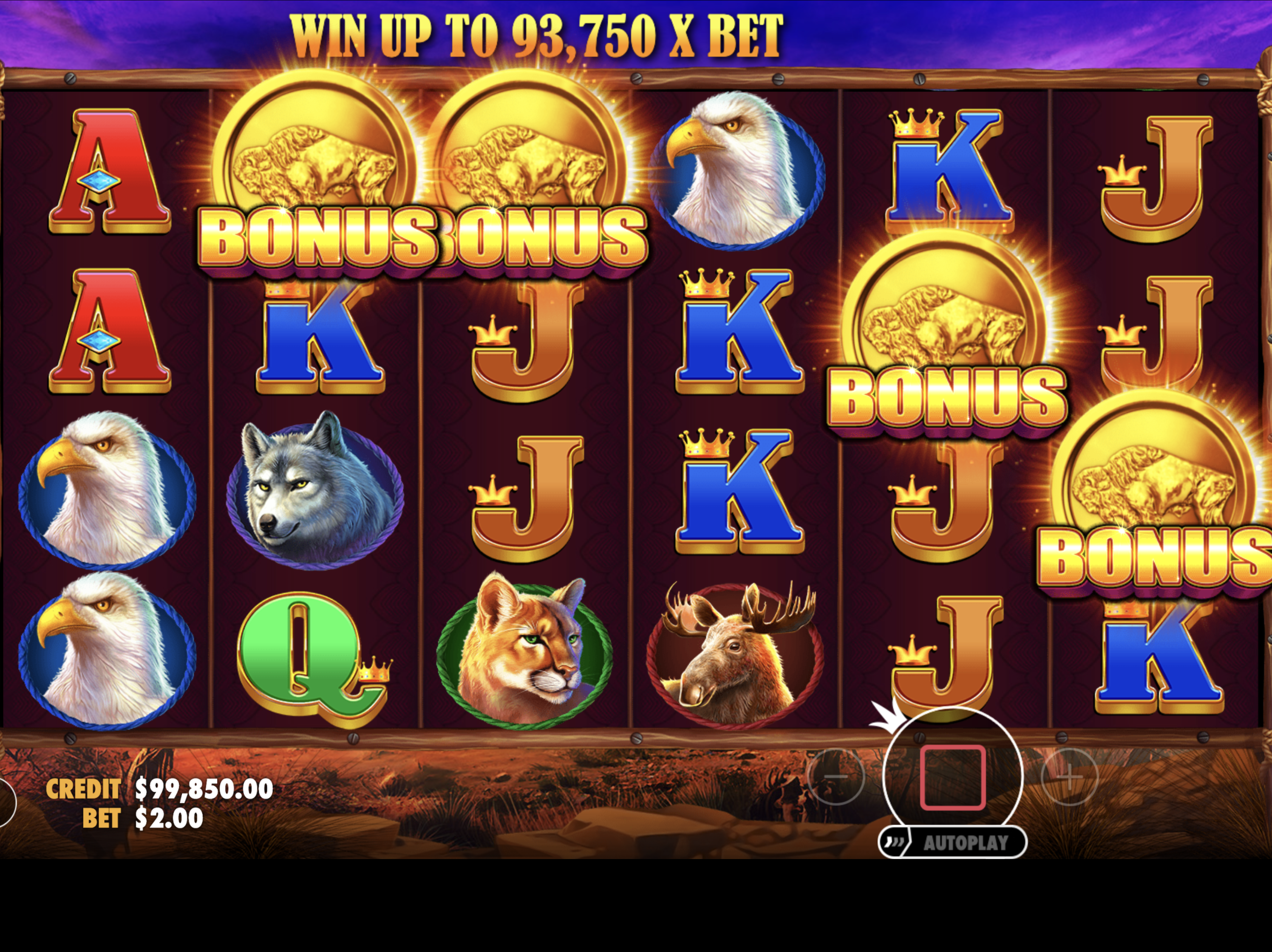
Buffalo King is built around a familiar “base-game grind, feature-driven payoff” structure: regular spins primarily deliver small-to-mid outcomes, while the game’s design reserves much of its upside for free spins where symbol behavior and screen coverage can change the payout distribution. Understanding how Buffalo King works is less about memorizing symbols and more about seeing how the game allocates value across its feature states.
How Buffalo King works at a systems level: base game vs feature state
In practice, Buffalo King operates in two distinct modes. The base game is the default state, where each spin is resolved and paid (or not paid) immediately. The feature state is entered only when a scatter-trigger condition occurs, after which the game runs a fixed sequence of free spins governed by slightly different constraints and opportunities than the base game.
This separation matters because it shapes volatility: a meaningful portion of the game’s expected return tends to be packaged into the bonus cycle rather than spread evenly across routine spins. If a session feels “quiet,” it is often because the game’s structure simply concentrates a lot of its payout potential into relatively infrequent feature entries, rather than because the game is “warming up” or reacting to play.
Outcome generation and what is actually determined each spin
Buffalo King is an RNG-based slot. That means each spin is settled by a random number generator selecting an outcome that the game then maps to visible reel stops and any associated feature events. The important structural point is not that it is “random,” but that the determination happens per round: the game is not choosing symbols one by one in a way a player can influence through timing, and it does not carry forward “due” outcomes from prior spins.
Actual implementations vary by jurisdiction and operator, but in regulated markets RNG behavior is typically evaluated against technical standards as part of game certification. For a general view of how independent testing organizations describe RNG evaluation, see eCOGRA’s overview: https://www.ecogra.org/.
Why the pay model feels directional: ways-to-win logic and symbol density
Buffalo King uses a ways-to-win style rather than a strict “one line equals one win” feel, which has a practical consequence: payouts are strongly influenced by symbol density across adjacent reels. Small “background” wins are more likely to come from common symbols forming short combinations, while the bigger swings require multiple reels to cooperate at once, often with help from wild substitution.
That design tends to create a lopsided payout distribution. Many spins resolve quickly with no hit or a minor hit, while the comparatively rarer moments when several reels align produce wins that feel disproportionately large. In other words, the game’s math is not only about how often you win, but which state (base or feature) you are in when the higher-density outcomes occur.
How Buffalo King uses wild symbols to “bridge” otherwise thin combinations
Wilds are structurally important in Buffalo King because they increase the chance that partial patterns become paying patterns, especially when reels produce a mix of mid and high symbols. In a ways-to-win environment, a single wild can act like a connector that turns a near-formation into a result that qualifies for payout, effectively increasing the number of viable outcomes without changing the stake.
This is also why players sometimes overestimate how “close” a spin was. Visually, a wild near a high-paying symbol can look like it almost created a large win; structurally, though, the game is not stepping through possibilities and failing them. It is resolving one outcome and animating it.
Feature entry: what a scatter trigger changes (and what it doesn’t)
The bonus trigger in Buffalo King is scatter-based. When the trigger condition is met, the game transitions into free spins. Two things typically change in a feature state:
First, the length of the bonus is defined by the feature rules (a predetermined number of spins, possibly with retriggers depending on the model used). Second, the feature often increases the practical impact of wilds and high symbols by giving you more total resolving events in a row, which naturally increases the chance that a high-density outcome appears during that window.
What does not change, structurally, is the idea that each spin is still independently resolved by RNG. Free spins can feel “hotter” largely because you are observing a cluster of consecutive trials in a mode designed to make premium outcomes more attainable, not because the game is attempting to compensate for past results.
When Buffalo King free spins create the session’s biggest swings
From a volatility perspective, the free spins phase is where Buffalo King can compress risk and reward. A dry run through the feature can produce only modest returns, but a single favorable sequence where premium symbols align with supportive wild behavior can dominate your entire session result. This is why two sessions with the same total number of spins can feel radically different: the difference is often whether the bonus cycle landed, and how efficiently it converted its limited spin count into premium combinations.
Round settlement, interruptions, and why “stopping” doesn’t change results
Buffalo King settles wins at the end of each round, including during free spins where the game accumulates outcomes across the feature until the final tally is paid. Interface controls like quick spin, turbo, or autoplay change only the presentation speed and input method; they do not alter the underlying distribution of outcomes.
One practical operational point: if a connection drops mid-feature, reputable platforms restore the unfinished round or bonus state when you return, because the game state is tracked server-side. That continuity is part of how RNG slot sessions are made auditable and consistent.
If you want to go deeper into how return is expressed and why the same title can show different RTP configurations across casinos, see this companion analysis: https://playstories.co/buffalo-king-rtp/. For the provider’s own framing of its slots portfolio and technical approach, Pragmatic Play maintains product information here: https://www.pragmaticplay.com/.
Leave a Reply