
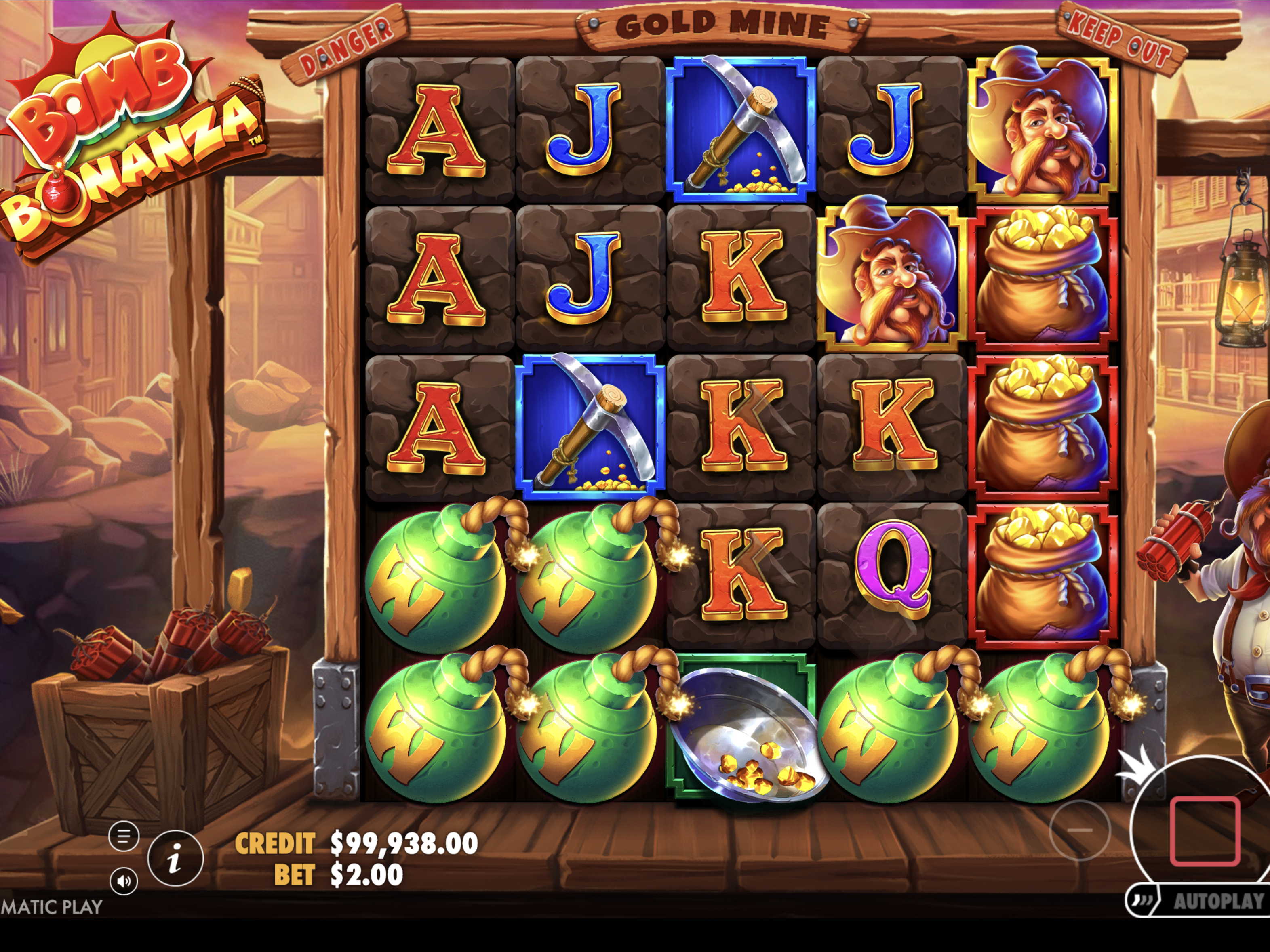
This Bomb Bonanza FAQ focuses on the questions that come up after a few real sessions, not the surface-level “what is this game” summary. Bomb Bonanza (Pragmatic Play) sits in the mines-style risk-selection family, where player choices affect payout shape and session feel even though results remain RNG-driven.
Does Bomb Bonanza change odds based on my last results or a hot/cold streak?
In a regulated environment, Bomb Bonanza outcomes should not adapt to your recent wins, losses, bet size, or time spent in the game. The typical model is that each round is generated independently by a random number generator (RNG), then evaluated against the selected risk parameters. Streaks can look “personal” because humans naturally cluster events into narratives, but clustering is also a normal property of randomness, especially in higher-variance setups where long runs of losses are more visible.
If you want a deeper integrity lens (what “rigged” claims usually miss), see this explainer: https://playstories.co/bomb-bonanza-is-it-rigged/.
Why can Bomb Bonanza feel more volatile than the RTP suggests?
RTP is a long-run average, not a promise about any single session. In mines-style designs, changing risk settings tends to redistribute the same overall expectation into different payout distributions. That means two sessions can have identical stakes and similar theoretical return while looking completely different: one may produce frequent small cashouts, another may produce long droughts punctuated by occasional spikes.
The practical takeaway is to treat “volatility” as the day-to-day experience of the payout curve, not as the game “tightening.” If you increase risk, you often reduce the number of survivable paths, which raises the chance of short sessions even if the occasional win is larger.
Do different risk settings in Bomb Bonanza change the RTP, or just the payout curve?
Depending on how Pragmatic Play configured the title, risk levels may change RTP, may keep RTP broadly similar, or may vary within a disclosed range. Players often assume “higher risk must mean better value,” but that is not automatically true. Sometimes the same average return is delivered with fewer, larger wins; other times the expected return can be slightly lower or higher at certain settings.
If the game info panel lists an RTP value (or multiple RTP configurations), that disclosure is more reliable than intuition. When casinos select between RTP versions, that choice is made at the operator level, not live-switched mid-session.
“My win didn’t add instantly.” How are rounds settled in Bomb Bonanza?
Most confusion comes from round lifecycle timing: the game client animates, the server calculates, and the wallet updates once the result is confirmed and the round is settled. If your balance appears unchanged for a moment, it can be a UI refresh delay, a wallet sync delay, or a brief connection issue.
To verify what actually happened, use the in-game history (if available) and the casino’s transaction log. Those records typically show the stake debit and win credit as separate ledger entries. If the entries exist but the lobby balance lags, it is a display issue rather than missing funds.
What happens if I disconnect or refresh mid-round?
In RNG casino games, the outcome is usually determined server-side, not by your device. If you disconnect, the round should still settle on the server and the result should appear in history when you reconnect. The most common user mistake is reloading repeatedly and creating uncertainty about whether a new round started or the old one finished.
If you suspect a round is “stuck,” stop interacting, reconnect once, then check history and the cashier ledger. If there is still a mismatch, you need the round ID and timestamp for support to investigate.
Is demo mode “the same” as real-money Bomb Bonanza?
Mechanically, demo mode is designed to mirror the same rules and math model, but there are two reasons it can feel different. First, demo sessions often involve unrealistic bet sizing and risk tolerance because no funds are at stake, which changes how volatility is perceived. Second, demo environments can run on different back-end configurations (for example, without a real wallet service), which changes how quickly results and balances appear, even if the underlying odds are intended to match.
Demo is useful for learning controls and understanding how different risk choices change the payout shape, but it is a poor tool for “proving” a casino is loose or tight.
Can I improve results by waiting, switching patterns, or using “safe click” systems?
Systems built on timing, patterns, or alternating bets typically confuse independence with predictability. If Bomb Bonanza uses an RNG model where each round is independent, then pausing, changing click order, or “resetting” after losses does not alter the underlying outcome generation. What these systems can change is your exposure: for example, cashing out earlier reduces the size of swings, but it also caps upside.
How do I sanity-check fairness in Bomb Bonanza without getting lost in conspiracy math?
Bomb Bonanza: what “fair” looks like in a regulated RNG game
A practical fairness check is procedural rather than emotional. Look for (1) clear disclosure of RTP and game rules, (2) audit/testing references at the operator level, and (3) consistent record-keeping via game history and wallet ledger. Reputable jurisdictions require technical controls around RNG and reporting. For example, the UK Gambling Commission’s Remote gambling and software technical standards outline the expectation that RNG outcomes are unpredictable and appropriately controlled: https://www.gamblingcommission.gov.uk/licensees-and-businesses/guide/page/remote-gambling-and-software-technical-standards.
What usually is not evidence: screenshots of streaks, “it always blows up after I raise the stake,” or sample sizes of a few hundred rounds. Those experiences can be real, but they are not diagnostic by themselves.
Is there a practical way to reduce session risk without pretending I can beat the game?
Yes: treat risk controls as variance controls. Lower-risk settings and earlier cashouts usually reduce drawdowns and extend session length, at the cost of smaller peak wins. Also, pre-commit to a stake size that makes the game’s worst-case sequences survivable for your bankroll, because mines-style games can compress losses quickly when risk is high. This does not create a player edge, but it does reduce the chance that one cold run ends the session immediately.
Leave a Reply