
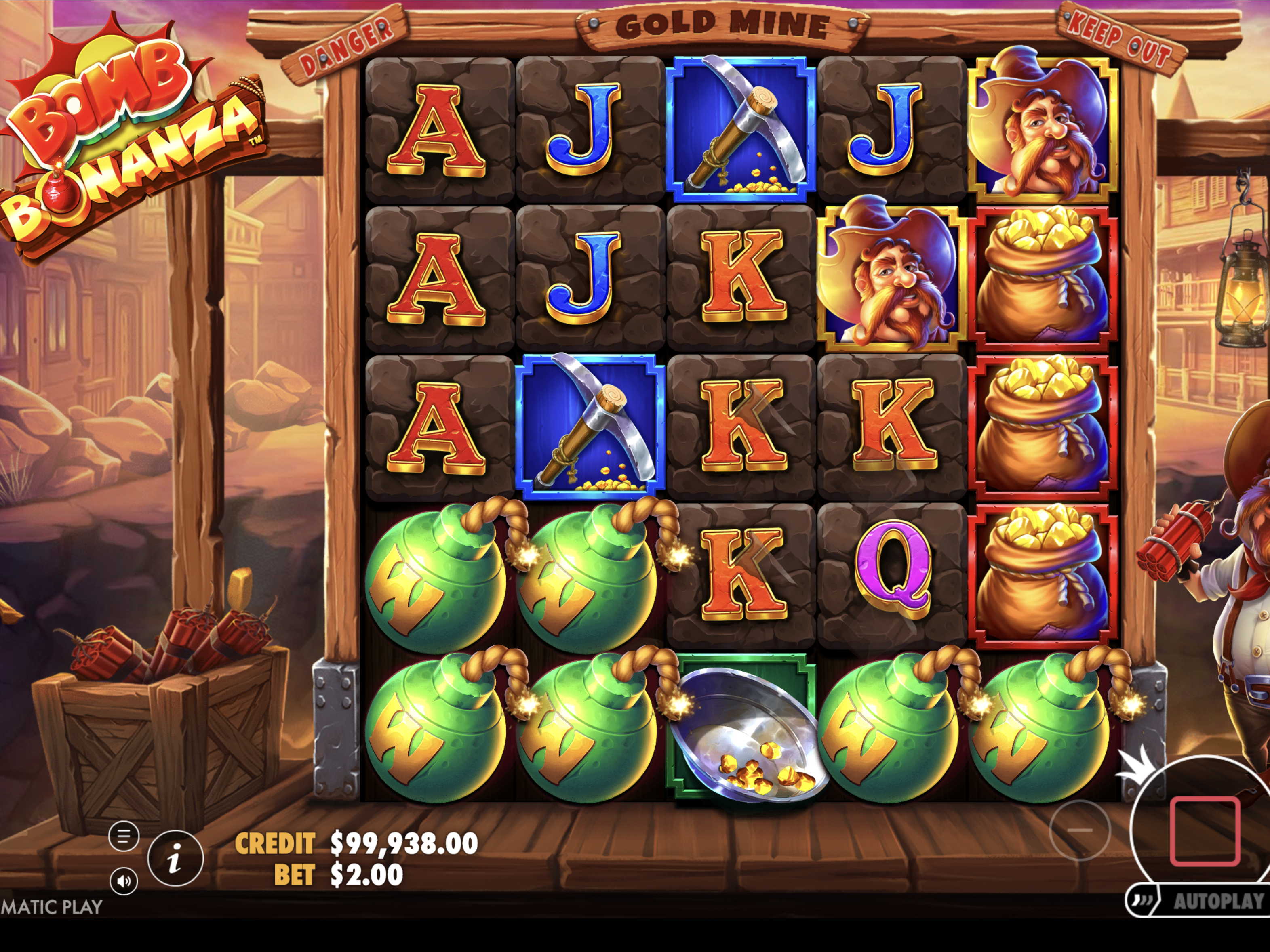
Bomb Bonanza fairness questions usually come down to one issue: who decides where the bombs are and when you “would have” hit one. In a mines-style instant game like this, the feeling of control can be strong because you choose tiles, but the crucial question is how the game commits to the underlying bomb layout for each round and how that result is recorded and settled.
How Bomb Bonanza outcomes are determined
Bomb Bonanza is typically structured as a single round with a grid and a chosen number of bombs (risk level). You place a stake, the round starts, and you reveal tiles one at a time. Each safe tile increases the cashout multiplier, and you can cash out at any point before revealing a bomb. If you reveal a bomb, the round ends with a loss of the stake for that round.
From a fairness perspective, the key point is this: the bomb placement for the round should be determined by the game’s core randomization process, not by the timing of your clicks. In well-implemented designs, the entire board outcome (the set of bomb positions) is established at round start and then simply revealed as you choose tiles. Your choices affect which pre-determined positions are revealed, but they do not “negotiate” with the game for a better or worse board after the fact.
That distinction matters because many player complaints implicitly assume adaptive behavior: that the game “moves” bombs to where you click. A standard RNG-driven lifecycle does not work that way. However, because the full board is not shown upfront, players must rely on the operator’s and provider’s integrity controls and on auditability signals.
RNG vs provably fair: what Bomb Bonanza fairness can realistically show
In most regulated casino deployments, Bomb Bonanza uses a random number generator (RNG) to select the positions of bombs (and thus the odds distribution for each risk setting). RNG-based fairness is primarily demonstrated through certification and ongoing compliance monitoring rather than through player-verifiable cryptographic proofs.
That is different from “provably fair” systems used in some crypto-focused games, where players can verify round outcomes using published seeds and hashes. If your Bomb Bonanza client does not display pre-committed hashes, server/client seeds, or a verification tool, then it is not offering provably fair verification in the strict sense. That absence is not, by itself, evidence of manipulation; it simply means the transparency mechanism is third-party testing plus operator oversight, not player-side cryptographic verification.
For general background on what RNG certification is designed to assess (randomness quality, predictability resistance, and conformance to declared game rules), sources like GLI’s publicly described testing scope are useful context: https://gaminglabs.com/.
Bomb Bonanza fairness and “streaks” that look suspicious
Mines-style games often produce emotionally salient patterns: long safe runs, sudden losses that occur “right after” raising stakes, or sequences where you hit a bomb early several rounds in a row. None of these outcomes are inherently inconsistent with an RNG, because humans tend to underestimate how clumpy randomness looks in short sessions. What you can evaluate more constructively is whether the game provides consistent math for the chosen bomb count: the cashout multiplier should rise according to a stable schedule tied to remaining safe tiles, and that schedule should not change based on bet size or recent results.
What you can verify inside the game client
When assessing Bomb Bonanza fairness, the most actionable checks are simple and practical:
- Game rules and paytable logic: The relationship between bombs selected, safe picks made, and displayed cashout multiplier should be deterministic and consistent.
- Round history and result logging: Many clients expose a history panel showing your past rounds and outcomes. Consistent recording helps with dispute resolution and makes it harder for a system to “rewrite” outcomes invisibly.
- Session behavior consistency: Switching between manual play and auto selections should not alter the underlying odds. Auto-play only changes decision timing, not the board generation process.
- RTP configuration disclosure (when available): Some games can be deployed with different RTP settings depending on jurisdiction/operator configuration. If the casino publishes the RTP variant in the help files, that is a meaningful transparency signal, because it ties expected returns to a declared parameter rather than a hidden one.
Settlement, disconnects, and why “it froze when I was winning” is a real fairness theme
Not all fairness complaints are about randomness. In instant games, settlement mechanics are just as important: what happens if your connection drops after you click a tile, or while you intend to cash out?
Legitimate implementations treat each click as a server-validated action with a recorded outcome. If the client disconnects, you should be able to see the final round state in history once you reconnect. A useful question to ask the operator is whether the game supports “resume round” behavior or always finalizes on the server side. Either approach can be fair, but the rules must be consistent and documented.
If you want a deeper look at how player suspicion forms around these edge cases and what evidence is relevant, see this related analysis: https://playstories.co/bomb-bonanza-is-it-rigged/.
Licensing and oversight: relevant, but only when it’s specific
It is tempting to treat “licensed” as a blanket guarantee. In practice, the meaningful fairness question is whether the particular casino offering Bomb Bonanza operates under a recognized regulator and whether the specific game build is within that controlled environment. Pragmatic Play generally distributes games through operators that may display lab certificates or regulator details in their footer or compliance pages. If those disclosures are missing or vague, you have less to independently anchor Bomb Bonanza fairness claims.
As a general reference point for how a major regulator frames game fairness and testing expectations (without implying any specific license for your casino), the UK Gambling Commission’s guidance on fairness and openness provides a useful standard: https://www.gamblingcommission.gov.uk/.
Bottom line: what “fair” can and cannot mean here
Bomb Bonanza fairness is best evaluated as an RNG-based, rules-driven product where outcomes should be generated independently of your bet size, timing, or recent results, then logged and settled consistently. What you typically cannot do is personally verify each round via cryptographic proof, unless the client explicitly provides provably fair tooling.
If you want higher confidence, prioritize transparency signals you can observe: stable multiplier schedules, accessible round history, clear disconnect handling, and an operator that publishes concrete compliance and RTP information for the game variant it runs.
Leave a Reply